
If you’re a Christian woman who has ever felt uncomfortable about your relationship with alcohol — but had nowhere to turn in your faith community — you are not alone. In fact, you’re one of millions.
I recently sat down with Ashley Key on The 700 Club Interactive to talk about something I spent decades navigating in silence: alcohol addiction, faith, and the lack of Christian resources specifically designed to help women like me. We also talked about my book, Freely Sober: Rethinking Alcohol Through the Lens of Faith, and what it means to be “sober curious” in a culture that normalizes drinking at every turn.
Whether you’re deep in the struggle, just starting to question your habits, or want to support someone you love, I hope this conversation — and this post — gives you a starting point.
My 20-Year Journey With Alcohol
I drank for twenty years before I found freedom. That’s not a sentence I say lightly, and it’s not one that came easily to share publicly. But it’s the truth, and the truth is what other women need to hear.
For most of those two decades, I wasn’t stumbling through life visibly drunk. I was a functioning person — holding down responsibilities, going to church, participating in community — while privately struggling with a dependence on alcohol that I didn’t fully understand and couldn’t seem to shake.
What made it harder was the silence around me. In Christian spaces, alcohol is often either ignored entirely or treated as a black-and-white moral issue. Neither approach helped me. What I needed — and what I couldn’t find — was a faith-based resource that met me where I was, without judgment, and helped me rethink my relationship with alcohol through the lens of my beliefs.
That gap is exactly why I wrote Freely Sober.
The Staggering Reality: 12 Million American Women
Here’s a number that stopped me in my tracks when I first encountered it: 12 million American women are currently struggling with alcohol use disorder.
Twelve million.
That means the woman next to you in the pew, your small group leader, your neighbor, your sister — any one of them could be quietly battling something they feel they can’t talk about in church. And most of them aren’t finding the help they need in faith-based spaces, because those resources largely don’t exist.
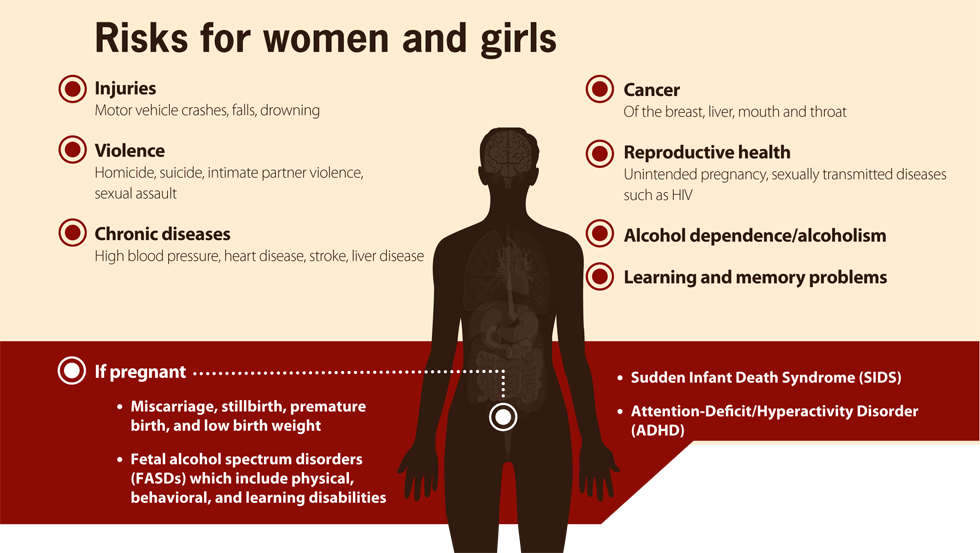
Meanwhile, our culture is doing the opposite of helping. Media, advertising, and social norms have aggressively normalized alcohol for women — “mommy wine culture,” girls’ night cocktails, wine as self-care. The message women receive from every direction is that drinking is not just acceptable, it’s expected. It’s funny. It’s how you unwind.
The church’s silence on this issue, set against culture’s loud endorsement of it, leaves Christian women in an impossible position. That needs to change.
What Does “Sober Curious” Actually Mean?
One of the things Ashley and I talked about on the show was the phrase “sober curious” — a term that might sound trendy but points to something genuinely important.
Being sober curious simply means questioning your relationship with alcohol — without shame, without a formal diagnosis, and without needing to hit rock bottom first. It’s a mindset of honest inquiry: Why do I drink? What does alcohol actually do for me? How would I feel without it?
You don’t have to identify as an alcoholic to be sober curious. You don’t have to have lost a job, a relationship, or a health milestone to wonder if alcohol is serving you well. Sober curiosity is available to anyone who wants to take an honest look.
For Christian women especially, I think this framing is freeing. It removes the stigma of needing a “label” and replaces it with a simple, faithful question: Is this habit aligned with the life I want to live and the God I want to honor?
Why Faith Makes the Difference
I’ve tried a lot of approaches to sobriety over the years. What finally worked — and what has kept me sober — was grounding my recovery in my faith.
That’s not a prescription I’m handing to every person reading this. Recovery looks different for everyone, and there is no single path. But for me, and for many of the women I’ve since connected with, faith provided something that secular recovery tools often couldn’t: a sense of purpose, a community of accountability, and a belief that transformation was not just possible but promised.
Freely Sober is my attempt to create the resource I wish I’d had — a book that takes both faith and sobriety seriously, that doesn’t water down the gospel or minimize the real, physiological pull of alcohol dependence, and that speaks directly to Christian women navigating this in a culture that isn’t making it easier.
The Importance of Community and Choice
Two things I cannot emphasize enough when it comes to sobriety: community and choice.
Sobriety is hard in isolation. It was never meant to be done alone. Whether that community comes through a church small group, a faith-based recovery program, a therapist who shares your values, or an online network of women on the same path — connection is not optional. It’s survival.
And choice matters too. Sustainable sobriety, in my experience, isn’t about white-knuckling your way through cravings with sheer willpower. It’s about making an active, ongoing, informed choice — one rooted in your values — every day. That kind of intentional choosing is something faith supports beautifully.
You Don’t Have to Figure This Out Alone
If any part of this resonates with you — if you’re sober curious, if you’ve been struggling quietly, if you’ve tried to talk about this in your church community and been met with silence — I want you to know that help exists.
You can find resources, community, and more information at sobrietycurious.com.
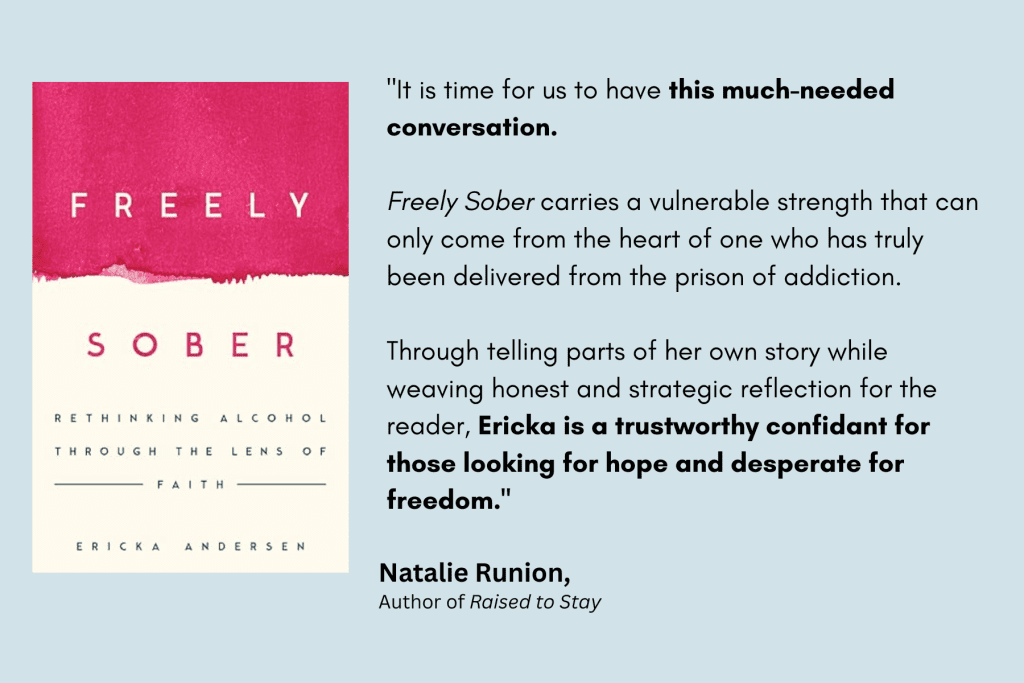
And if you want to go deeper, Freely Sober: Rethinking Alcohol Through the Lens of Faith is written for you. Not for someone with a worse problem, not for someone further along in their faith journey — for you, exactly where you are right now.
Watch my full conversation with Ashley Key on The 700 Club Interactive below, and share it with any woman in your life who might need to hear it.
Ericka Andersen is the author of Freely Sober: Rethinking Alcohol Through the Lens of Faith. She writes and speaks about Christian women, sobriety, and faith-based recovery. Learn more at sobrietycurious.com.
INTERVIEW TRANSCRIPT
To start, can you share your personal journey with alcohol?
When I started drinking in high school, like many people, it felt like harmless rebellion. I had no idea it would open up 20 years of struggle and an unhealthy relationship with alcohol and addiction. I wrestled with it for a long time. I knew God was calling me to give it up, but I was holding on to it like an idol. There was also a lot I didn’t understand about addiction itself.
Five and a half years ago I was finally able to stop drinking — and I wanted to tell everyone about it. There weren’t many Christian resources on sobriety, especially for women, and that’s what led me to write Freely Sober.
You talk about being “sober curious.” What does that mean?
Being sober curious means listening to the questions forming in your own head about alcohol or unhealthy patterns in your life. It’s following that nudge in your heart or spirit that’s saying, maybe I need to look into this a little more — without shame, without pressure, just learning. Instead of running away scared, you ask: what does God have to say about this? What is this actually doing to my life?
What kinds of questions were you asking yourself during that season?
Like a lot of people, I was Googling in the middle of the night so no one would see. Things like: Am I an alcoholic? How much is too much? Are there Christian alcoholics? How do I quit drinking? I felt deeply ashamed. I was a mom, a Christian mom — leading Bible studies, attending church regularly. This was not something I thought I was supposed to be struggling with. So I didn’t tell anyone, I didn’t ask for prayer. That hiding is a big part of what kept the struggle going for so long.
How was your relationship with alcohol affecting you spiritually?
It was a real barrier to God. My spiritual life couldn’t grow the way it was meant to. I kept running to alcohol — a substance — instead of running to the life-giver. I always pictured myself as a flower meant to flourish, but every time I ran back to drinking it was like pouring poison on whatever growth I’d had. God wasn’t absent, and He can absolutely work in your life while you’re struggling with addiction — but there are limits to what can happen when you’re not willing, or not yet able, to let go.
What was your turning point?
Motherhood put everything into perspective. I had been sober curious for probably 12 years before I actually quit. I kept thinking, if I tell someone I have a problem and then relapse, they’ll judge me. So I stayed quiet. But when my daughter was two and my son was four, the nightly drinking became so habitual and addictive that I looked at myself in the mirror one day and asked: Do you want to still be struggling with this at 75 or 80 years old? Because if you don’t stop, you will.
The other piece was my kids. I thought: if something ever happened to them while I was drinking — even if it had nothing to do with that — I would blame myself for the rest of my life. God was showing me so clearly that I needed to lay this down. I stopped, relapsed, started again — but eventually I was able to say no more for good. The freedom I found on the other side is exactly what I write about in the book.
Alcohol is often seen as a “man’s problem.” But the data tells a different story, doesn’t it?
It does. According to the National Institute on Alcohol Abuse and Alcoholism, more than 12 million American women struggle with alcohol in some form. For the past 25 to 30 years, women have been heavily marketed to by the alcohol industry — the bright, beautiful drinks at Target and grocery stores, the beach imagery, the messaging that says drinking is fun, normal, and expected. We’ve all heard the joke: alcohol is the only substance you have to explain why you’re not doing it anymore. Tell someone you quit smoking and they say “good for you.” Tell someone you quit drinking and they ask, “did you have a problem?”
Part of Freely Sober is journalistic — I dug into the data. We have been sold a lie about alcohol. More than 80% of domestic violence cases involve alcohol. Substance abuse is a factor in an enormous percentage of foster care cases. This is not a benign topic. I’m not saying drinking is a sin — that’s a conversation worth having — but as Christians, we need to think more deeply about what alcohol is doing to our families, our culture, and our kids. The Bible mentions the sin of drunkenness 70 times. That’s worth taking seriously.
What would you say to someone who is sober curious right now and on the fence?
Follow that curiosity. The title Freely Sober isn’t just about being free because I’m sober — it’s about choosing sobriety freely, in the knowledge that your life is going to be better because of it. It’s not something forced on you. It’s a freedom you get to choose.
And please — talk to someone. Get it out of the darkness and into the light. God gave us community, He gave us the church, He gave us people around us for a reason. We cannot do this alone.
Where can people find more resources?
If you’re sober curious or this conversation resonated with you at all, I have a free guide at sobritycurious.com. My book, Freely Sober: Rethinking Alcohol Through the Lens of Faith, is available nationwide. You can also find more at ErickaAndersen.com and follow me on social media.